
For the Clay Lover
IIP Interview Series with Leslie López Torres of Aldama Cerámica

The IIP Series, also known as the Influential and Inspiring People Series, was created to showcase the many talented, hardworking, and innovative individuals I have had the privilege of knowing. I want to be able to share their stories while inspiring others to build their own paths along the way. Many of them are making an impact in this world through their passions, and I want their stories to be heard. This one is for the Clay Lover.
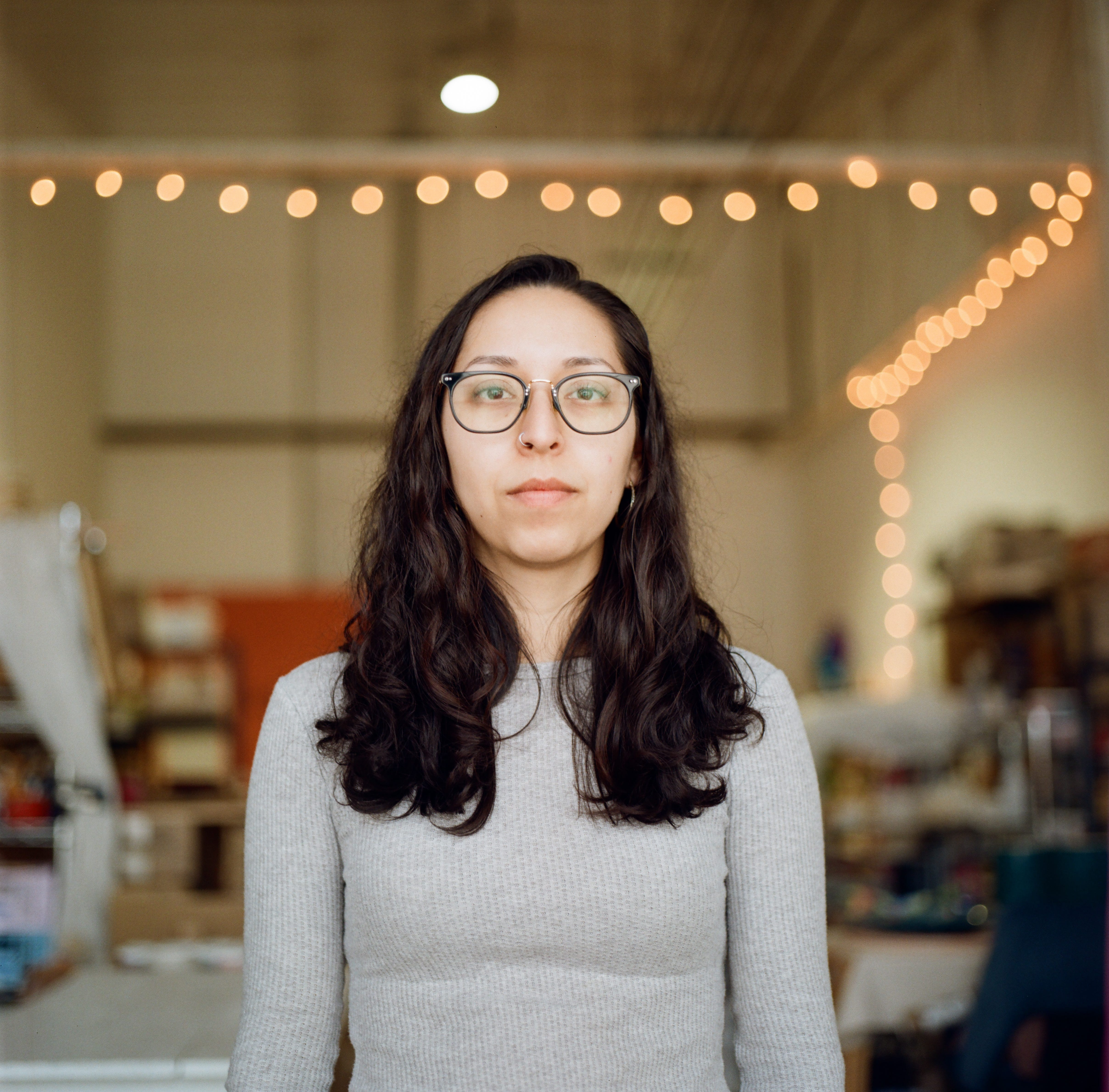
Leslie López Torres
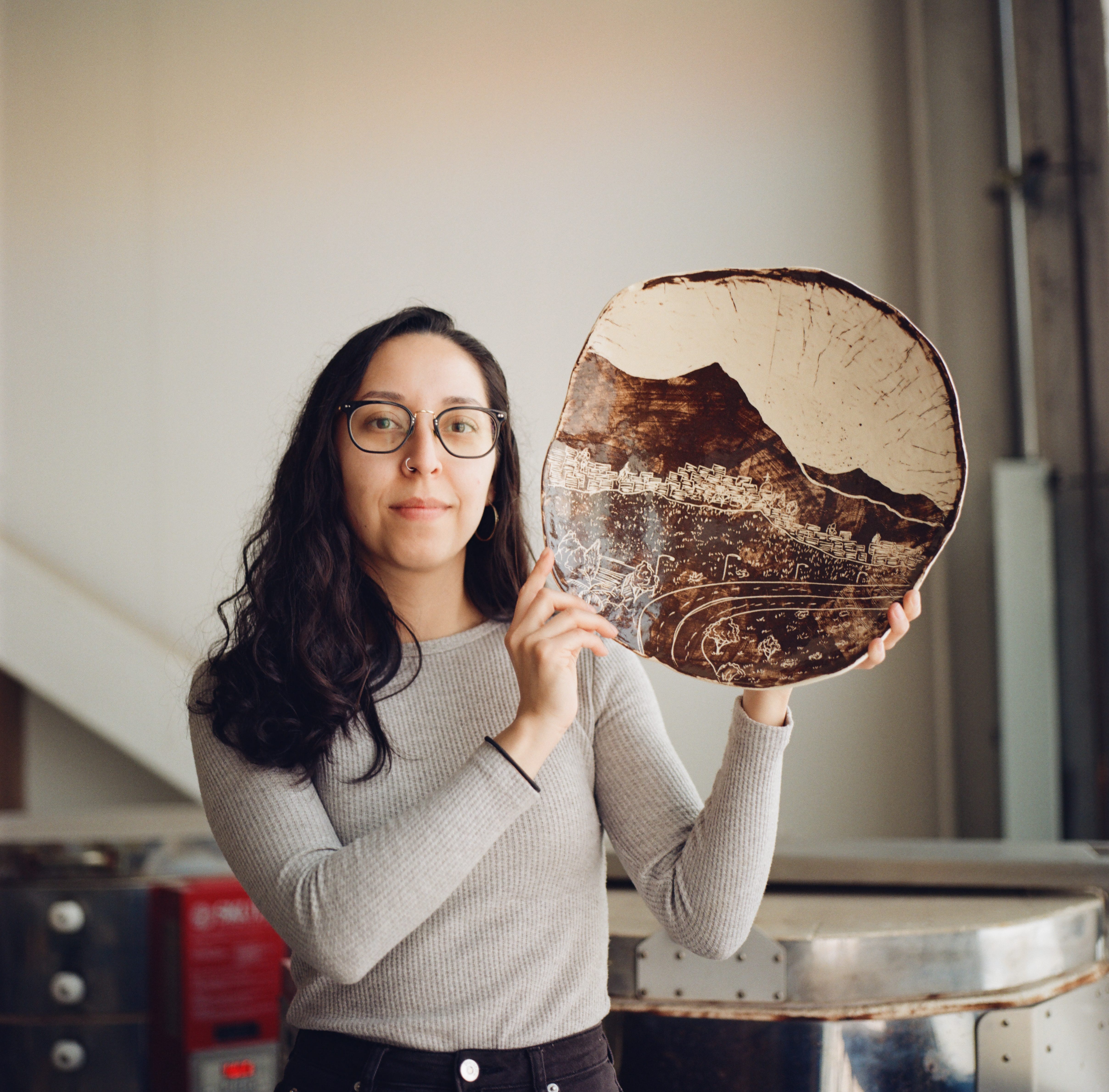
Leslie was a customer who had stumbled across my in-person pop-up for Studio Mestiza back in 2024. Little did we know that we had a shared love for ceramics, as at the time, I was beginning my ceramics journey, and I was only selling my botanical soaps. Leslie became a recurring customer for my shampoo bars, which made me overjoyed to know how much she loved them. After following each other throughout the years on social media, I was happy to have made a friend with a shared passion for discovering and representing our Mexican roots through our art.
It’s wild to think that the community I have built here with Studio Mestiza has led me to meeting so many amazing and talented individuals, just like Leslie, who are so supportive of the work I do. They inspire me to keep making, to keep writing, and to keep documenting stories that I can, in turn, share back with the community.
Before sitting down in conversation with each other at her Oakland studio, Leslie took me to her neighborhood coffee shop called Proyecto Diaz, a coffee roasting company that supports and uplifts farms throughout Latin America. Leslie recommended the spicy mocha, which I ended up absolutely loving alongside the pan de elote and puerquito pastries. I told Leslie that I could see her ceramics displayed on the shelves at Proyecto Diaz. Her artistic style fits right in with the other Latino-made art and local businesses that are highlighted throughout the coffee shop.
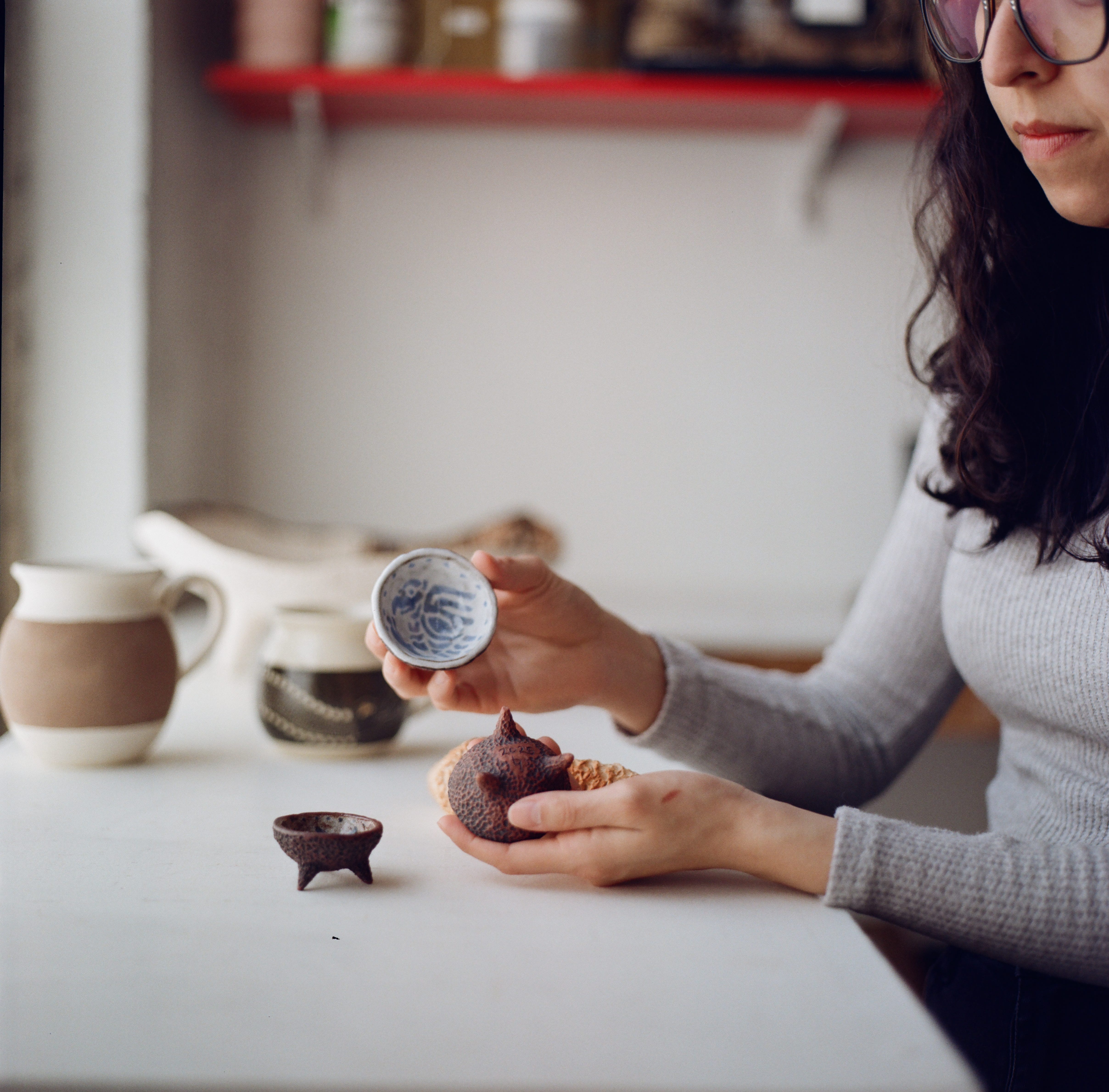
Leslie’s art journey started at CSU Chico, where she was studying to be a painting major in school. She was focusing on oil painting up until her last year, when she was required to venture out into other mediums, so she decided to try ceramics. She had the realization that she wanted to pursue ceramics, but her needs were not being met by the school or the ceramics teacher she had. Leslie ultimately decided to return home and make the transfer to CSU East Bay, where her new ceramics professor, Jen Brazelton, helped acquire her current job teaching at Wheelhouse after graduation.
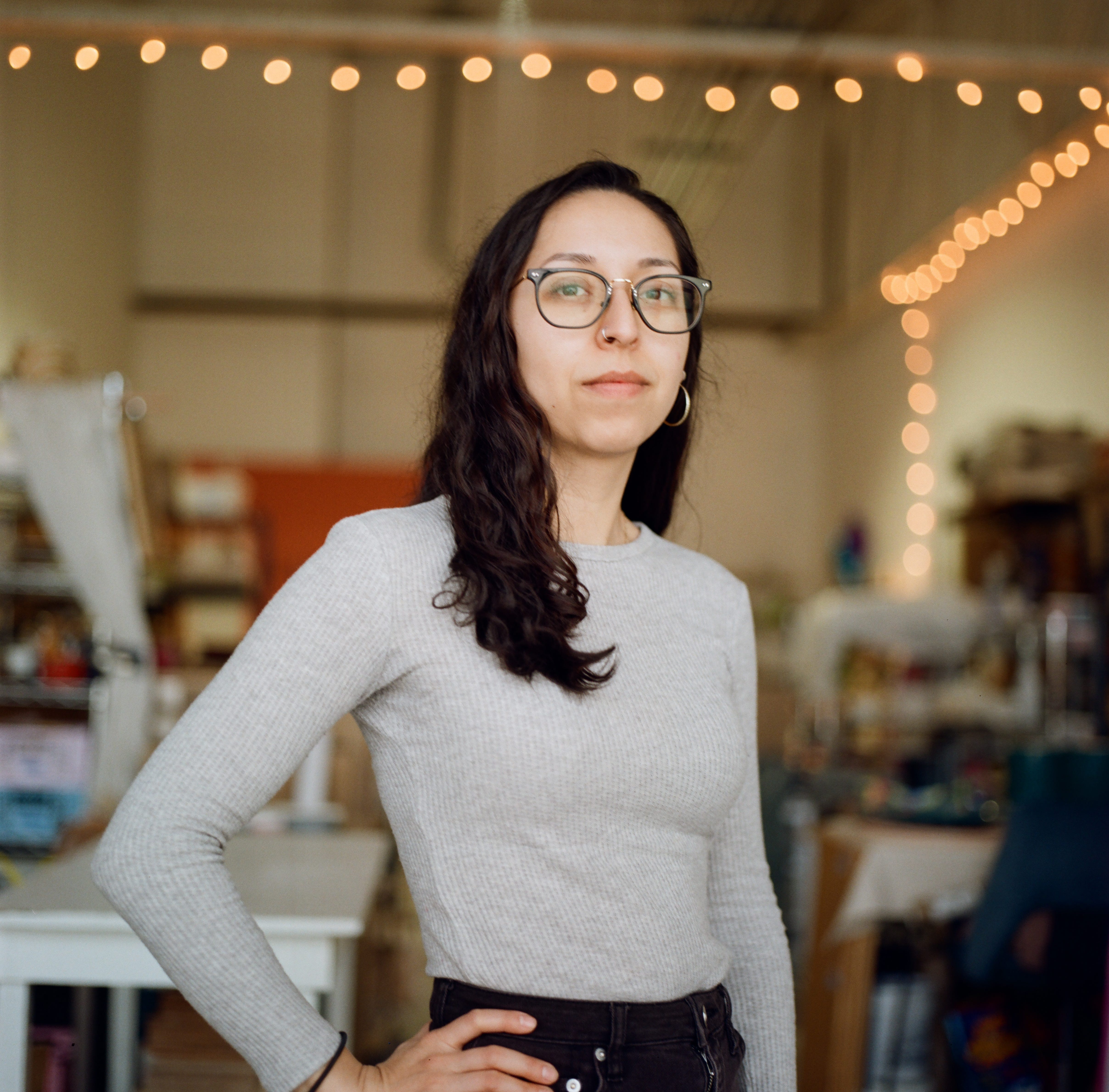
Up until high school, Leslie would spend her summers and some winters in Jalisco, Mexico, where her parents are from. Her mom is from Guadalajara, and her father is from a rancho about an hour and a half away from Guadalajara.
“When I think of Mexico, there’s a very distinct feeling of how society and culture moves in Mexico versus how it moves here. So that also has informed a lot of the community aspect. You go to Mexico, and you say hi to everyone. Everyone is so open about just communicating with strangers. I feel like it’s better now [in the U.S.] during these times, a lot of people are leaning into community, but back then, when I was growing up, there was a huge difference of being in Mexico, being comfortable, walking, going to the corner store, saying hi to the shop person.
There’s a different type of trust over there. You just feel like everyone is family.
Ceramics became increasingly important to Leslie while in university because she stopped visiting Mexico after high school. She was a full-time student with a part-time job and couldn’t find time to visit her family in Guadalajara. It made her want to connect more than ever and get back to her roots. That’s the feeling that she got from working with clay. Clay reminded her of Mexico, walking through the tianguis, or markets, and seeing all the pottery and fresh produce.
Her memories are also based around cooking and eating meals together. For Leslie, a molcajete, a traditional mortar and pestle, reminds her of her grandma’s kitchen. A molcajete is a statement piece in a Mexican kitchen. It’s iconic.
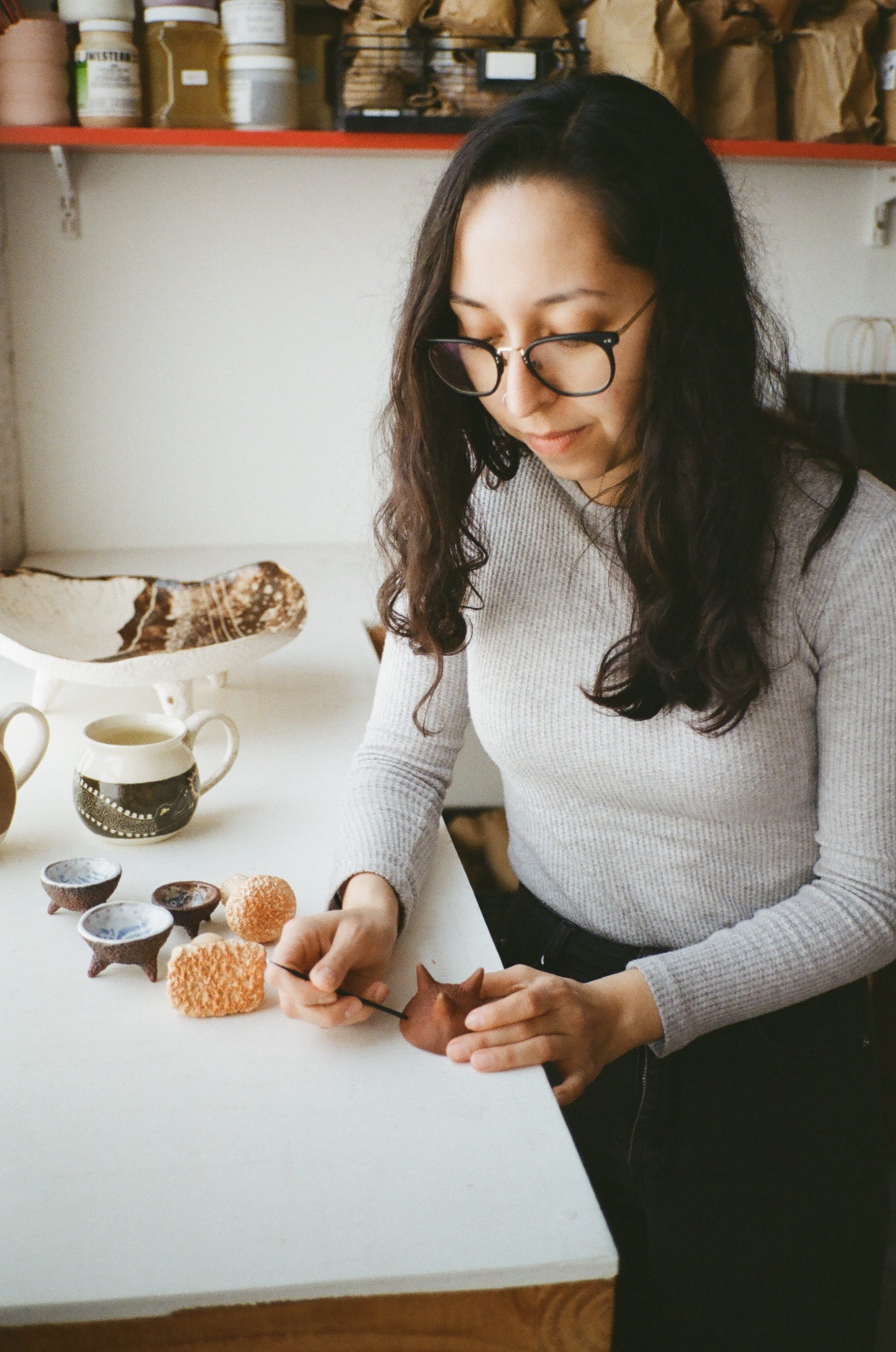
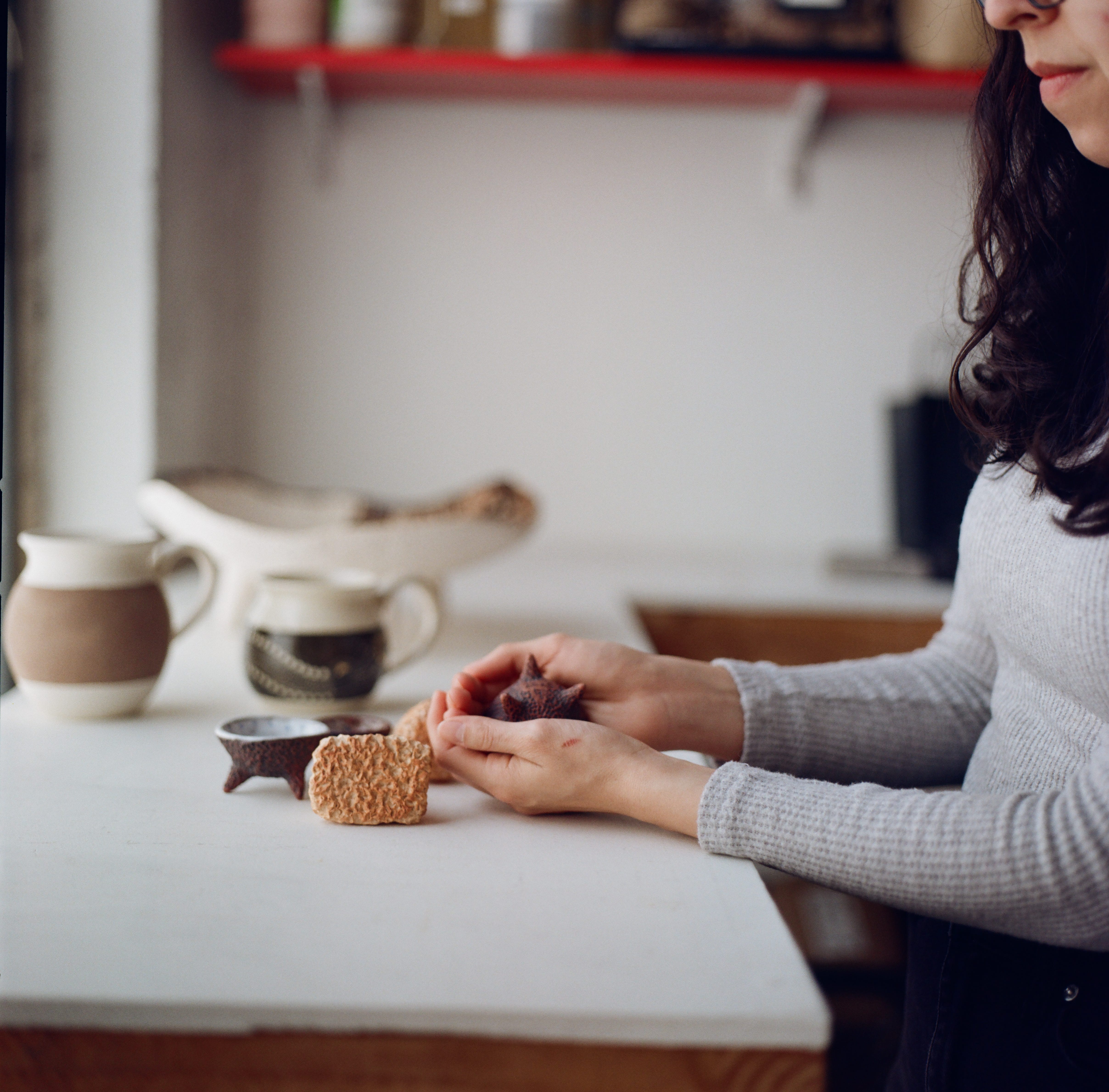
“A lot of the time, when we were in Mexico, either at home or we would go to the campo and make a little bonfire and make food for the day. All of that was just around having a meal together. Food and family are just hand in hand.”
Cooking outside in open-air kitchens is common in Mexico. Cooking outdoors, surrounded by nature with wood-burning stoves and cob ovens like chimeneas made out of clay and mud, is a completely different experience that adds to the flavors of the food. Though they have a kitchen in their home back in Guadalajara, Leslie and her family preferred cooking outdoors, where there’s more space. They could have people over, making the act of cooking less of a chore and more like a hangout.
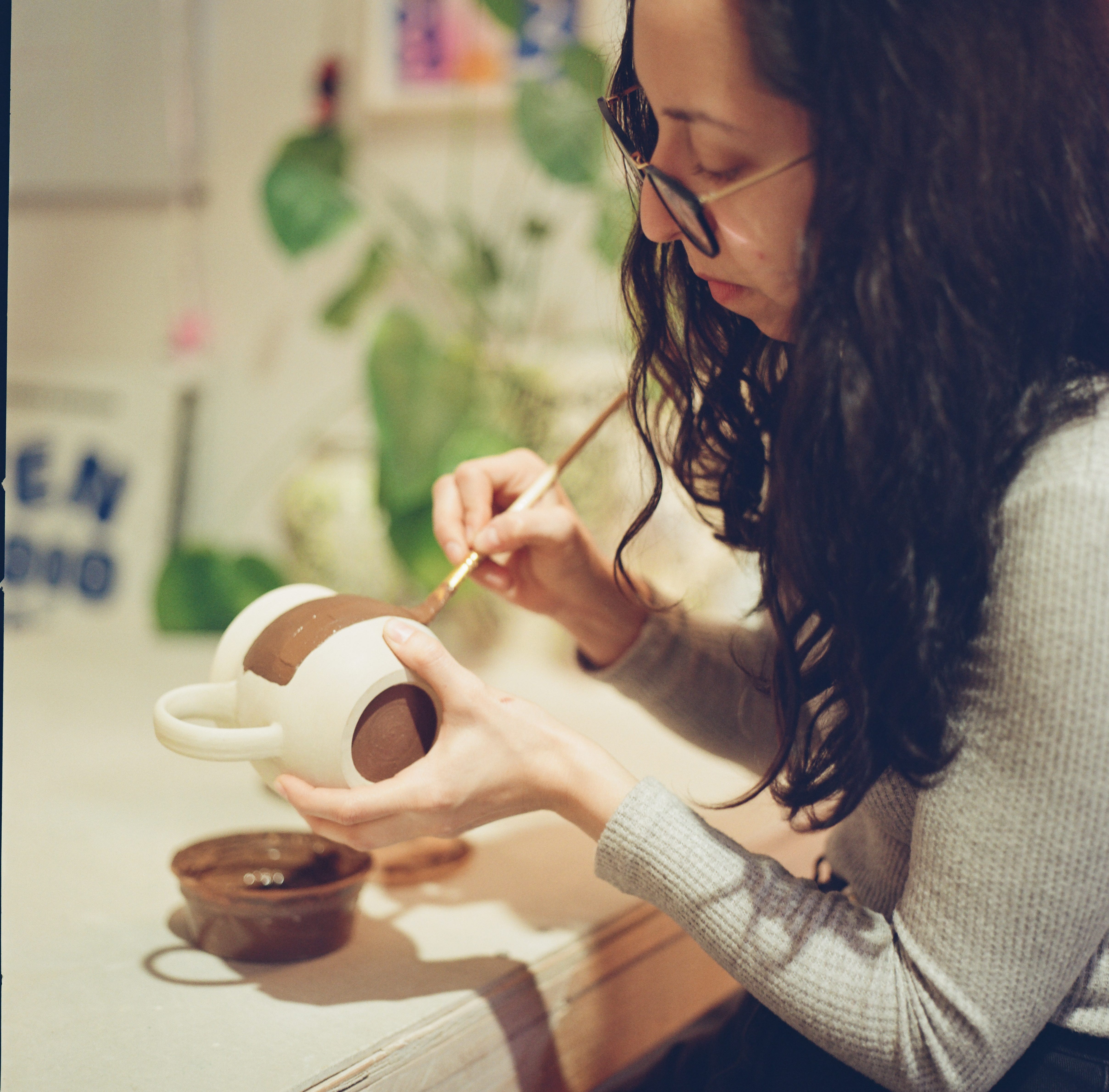
“With ceramics, I think of it as clean lines, especially porcelain. I never work with porcelain. I always say it feels too cold. It’s too delicate. There’s no warmth. It feels like I’m not invited to touch it. Like, I should just keep it on a pedestal and just observe it. There’s space between you and the porcelain versus dark clay. It feels like I can get close, and it’s okay for me to engage with [warmer clay].
I do want people to touch my pieces. When I have my markets, I always tell them, ‘Feel free to pick things up just because I want you to feel the texture.’ It’s different. If they want a piece, they need to be able to see that. Like, how does it feel in your hands? You know, don’t just look at it, but hold it and pretend like it is yours.”
Leslie participates in one to three markets per year. They usually take place around the holidays and/ or Spring at Wheelhouse. She also hosts one at her Oakland studio, along with her other studiomates, for the holidays as well. Leslie hopes to branch out to theme-specific markets, such as for Día de los Muertos or Aztec Mixica New Year, in the future.
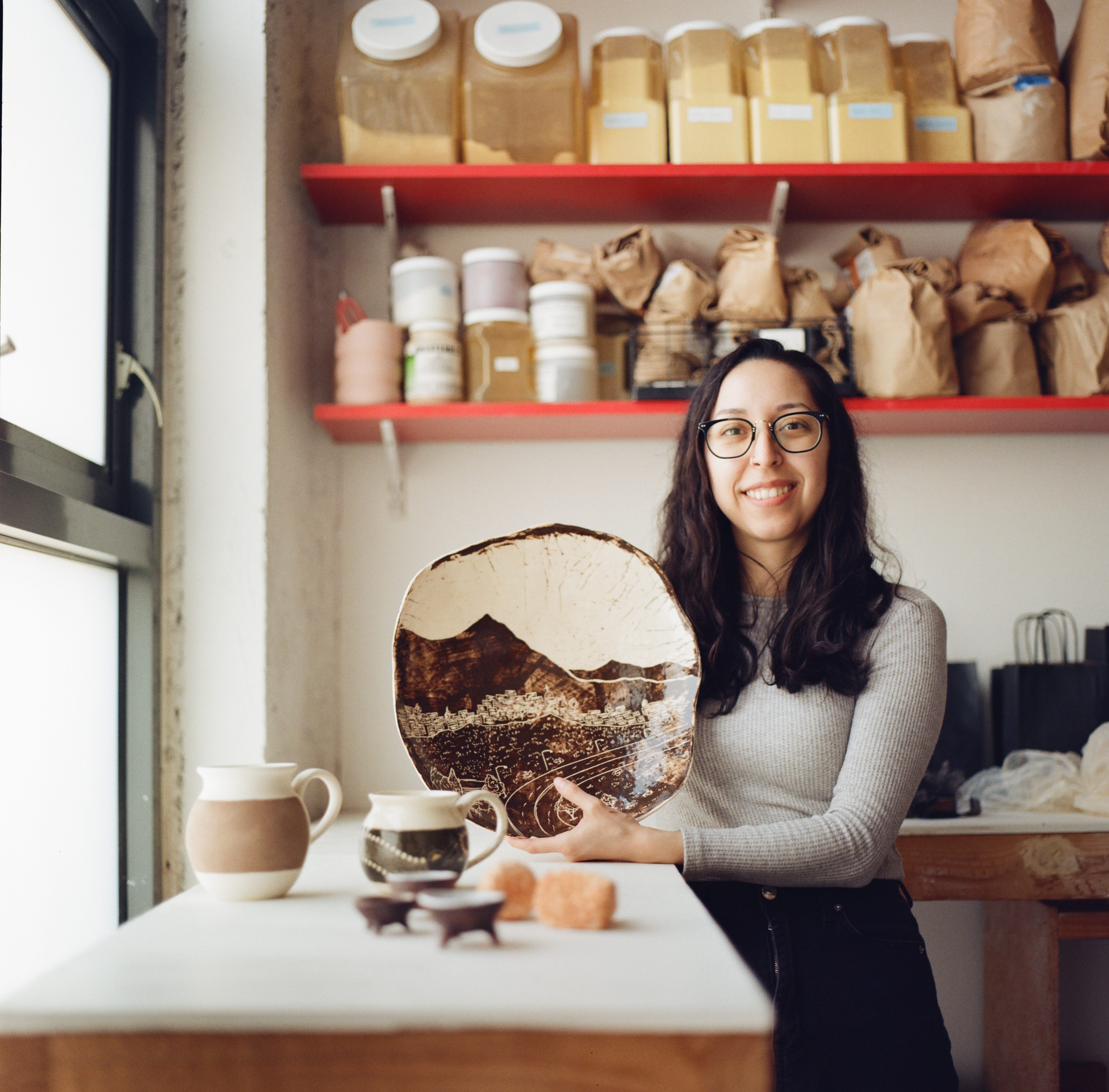
“My parents were pretty supportive in the way that they were just like, ‘Okay, you do whatever you want to do.’ But for the longest time, even now, I think they still don’t fully understand what I do or how much work I’ve put into making things. They see my finished stuff, and they’re like, ‘Oh yeah, that’s beautiful,’ but they don’t see all the time that it took to make something like that.
When I first told my mom that I was gonna go to school for art, she was, like, ‘well, what are you gonna do with that? What kind of job would you be getting?’ Luckily, I did always want to go into teaching. Education’s always been something I’d love to do. Even back when I was younger, helping other students… being a mentor…after-school tutor… I have always been doing things like that. So I always knew helping to teach is something that I really enjoy. So I was like, okay, I’ll still be a teacher, but I’ll be an art teacher.”
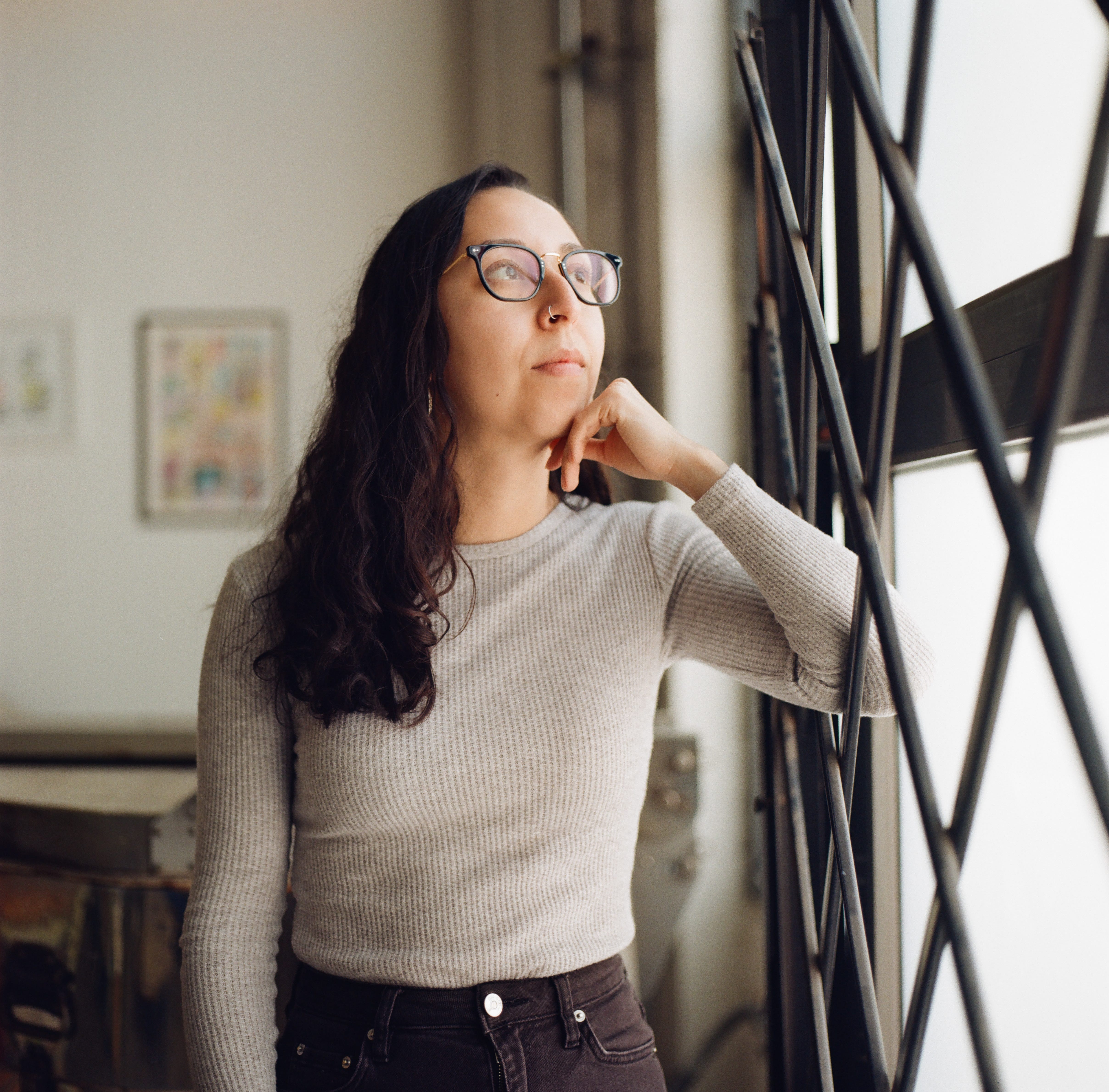
Naturally, the topic of burnout came up in our conversation. Leslie takes physical breaks from making ceramics and goes back into discovery mode when feelings of burnout arise. With her collection of books from thrift stores and secondhand shops, she finds inspiration in Mexican art books that cover topics of creation and history. Through books, she rediscovers herself as an artist, which informs the meaning of her work from a cultural standpoint. Leslie also researches online and sees what other artists are making, not to make more work, but to focus on getting inspiration for the sake of inspiration. Oftentimes, seeing what others are doing, such as using a specific color combination or vessel shape, can lead Leslie to be more enthusiastic when trying to find something different within her own work.
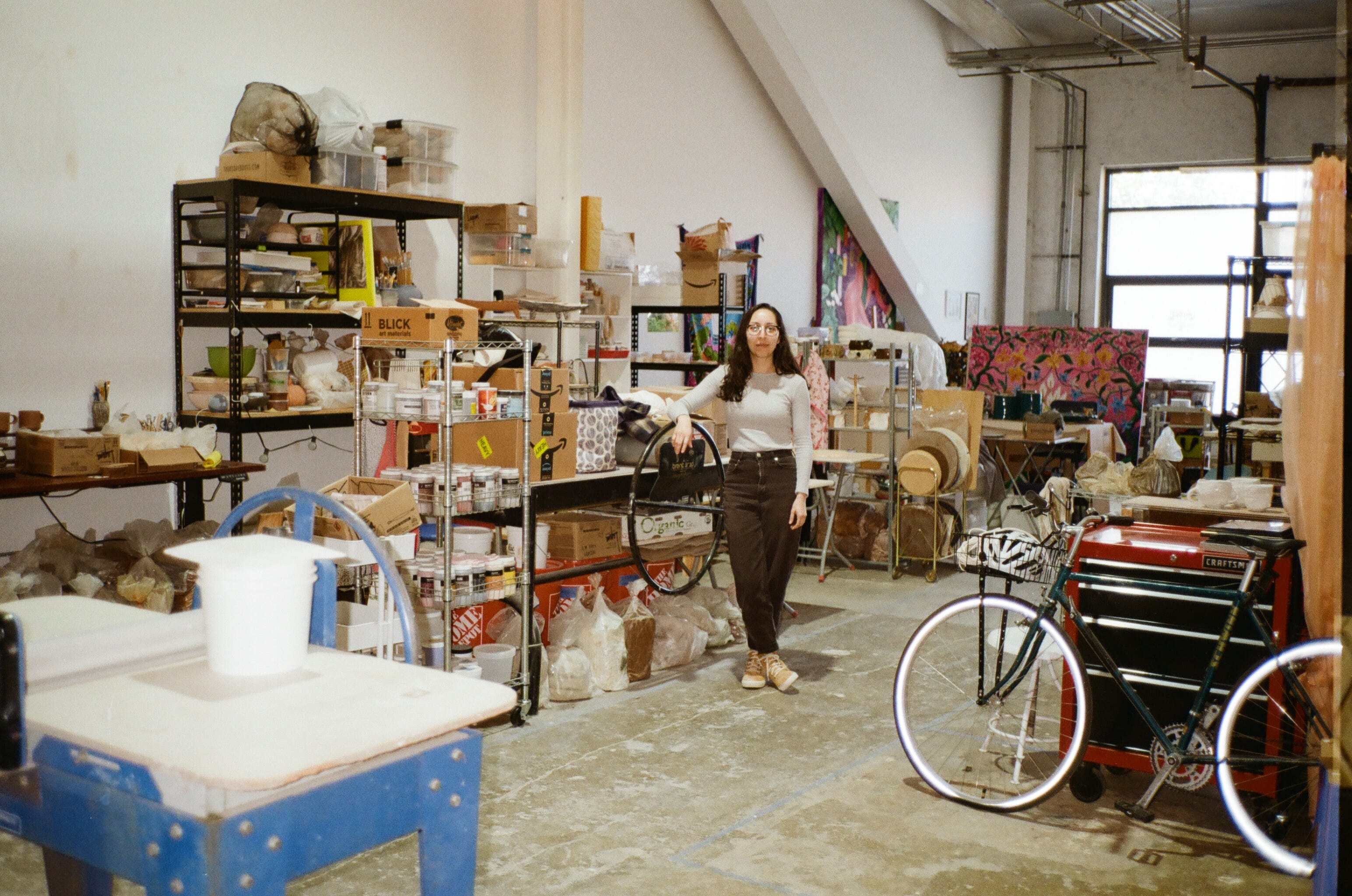
“That’s usually what helps me. And the fact that I am teaching and not just making, and vice versa. Sometimes I get burnt out with teaching. After a while of just teaching, it’s the same thing over and over again, especially when [teaching a] wheel class. At least I teach handbuilding classes, so each class is a little bit different, with what the students are making. It engages me more. Versus wheel, we’re all working on making cylinders. When I get burnt out with teaching, I try to come to my studio more.
It goes back to the community aspect, but I think for me, just community in general… it’s so important. This [studio] space, this is like a little community. My space at work - that’s another community. My friends, my family, that’s another community. And then when I have my markets, that’s when sometimes, they all kind of come together. It’s really nice to think of it that way, where sometimes, by need-specific things, I can go to specific communities to help or for myself to feel better. If I’m feeling burnt out and I need to have a day out, I’ll call my friends and get that community to help me.”
For Leslie, hand-building is her primary way of working, especially when she wants to make large pieces. She also enjoys throwing mugs on the wheel because it’s meditative, making her signature jarrito jug-shaped mugs over and over again.
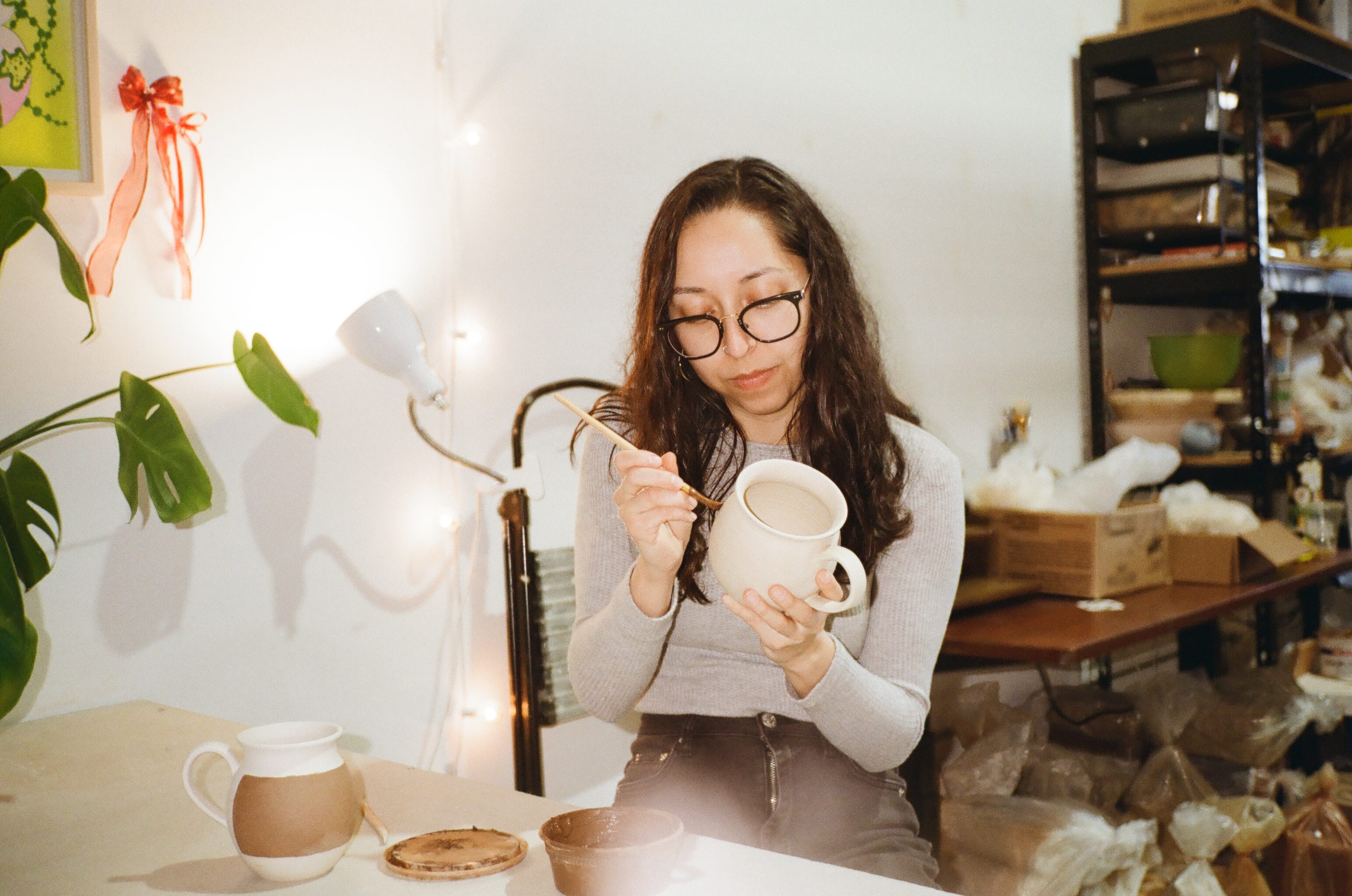
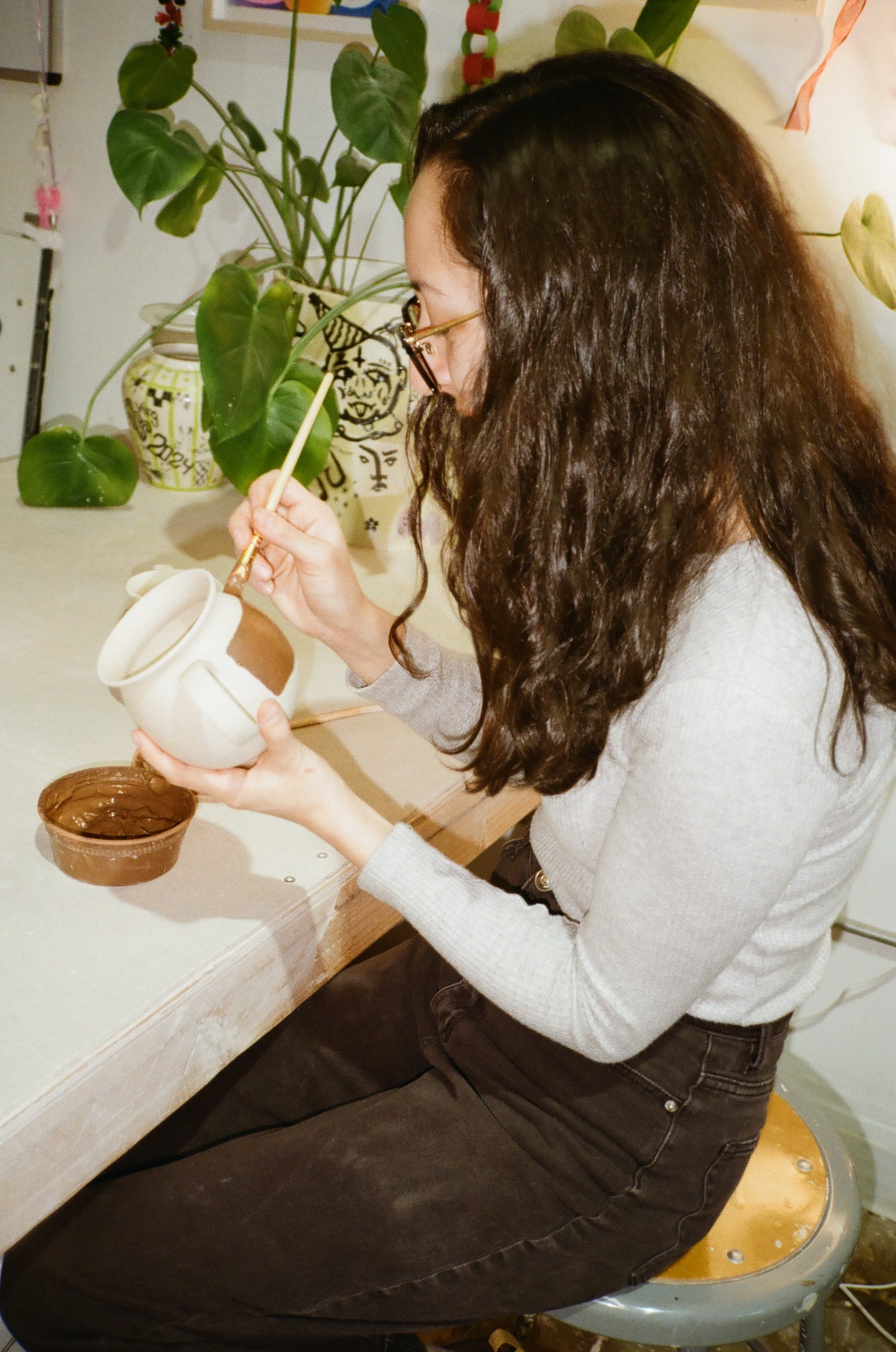
“The wheel is just the vehicle for you to make something, but then once you get it off and you can actually do your decorating, that’s when you’re adding your personality, your soul back into the clay. That’s why, sometimes handbuilding feels better because you’re immediately putting yourself into clay right from the start.
Primarily, I do slab work. I do like that clean, smooth look sometimes. So, the slab building is like my way of making more streamlined objects without using the wheel, but getting a similar feeling… It’s like that in-between where it’s just me building things, and I’m not fully engaging with the entire clay body. I’m only working with the seams and the edges and stuff like that. So it’s like that nice in between. It feels more of a quiet space when I work with slabs.
And then when I do pinching and coiling, it’s for bigger sculptures that have a very specific purpose. So either for an exhibition or something very specific, that’s when I employ those techniques. Every time that I’m pinching the coil down, I’m actively always paying attention to how I’m building every single inch. I’m always fully engaged when I’m doing the pinching and coiling. A lot of my coiling and pinching pieces have to do with more thoughtful projects and compositions… things that have more meaning to them. Not that my other stuff doesn’t, but in a different way. I definitely put more of myself into my coiled pieces, and then part of myself [in] my slab building pieces or my wheel pieces, and the way that I decorate them.
When I do my wheel-thrown stuff, I don’t usually just glaze it. I like to do sgraffito and add images to them. I want to add part of myself to it before I offer it to someone else to take home.
When I do markets and when I sell my work, I don’t want to just make work for the sake of selling work, you know? Like, I wanna make work that is more representative of myself. Who I am as a person. Like what I’m trying to say about my culture and sharing my culture with other people.”
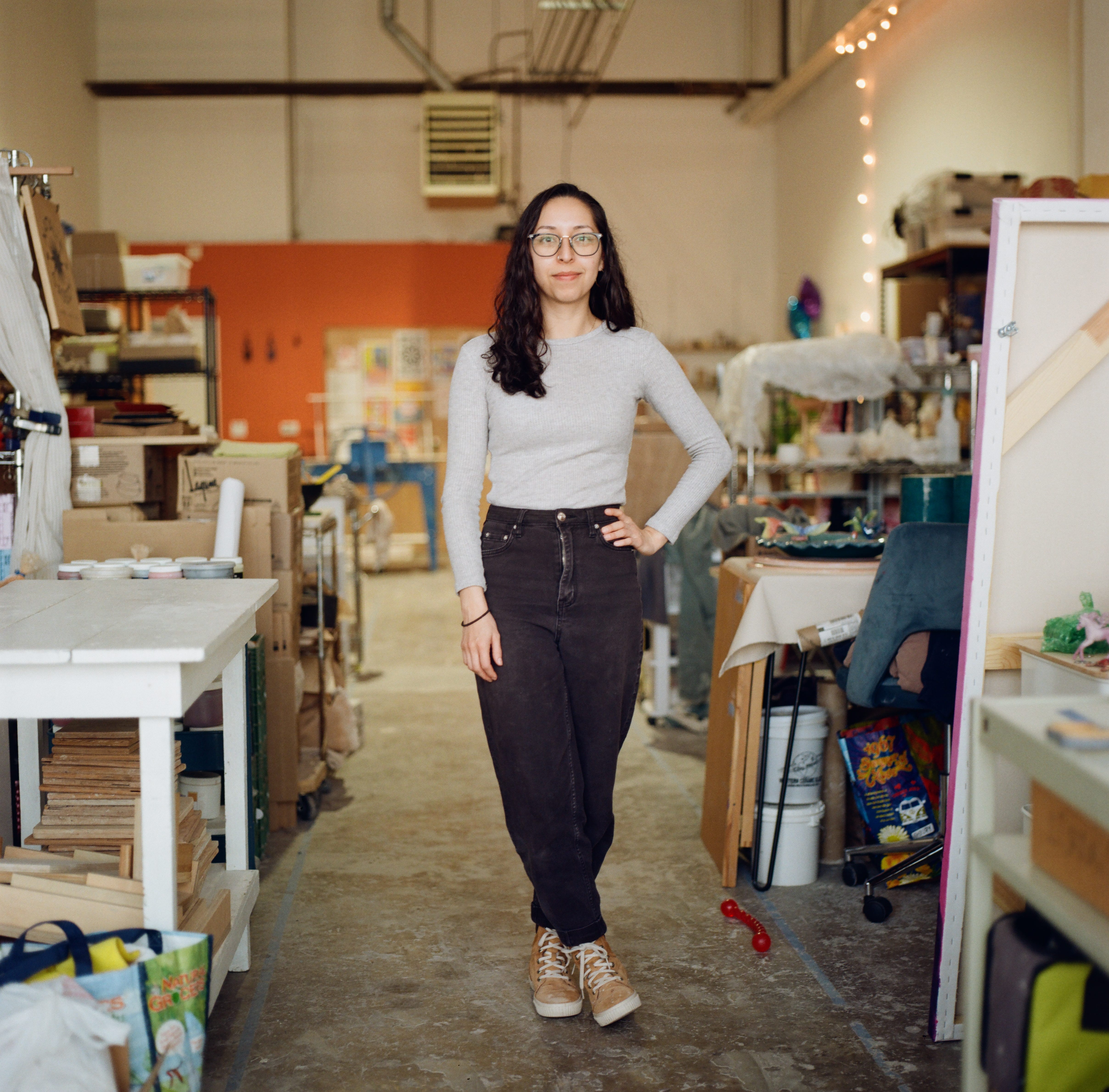
Leslie uses her experiences as a student to inform her experience as a teacher, remembering her own teachers who left a lasting impression on her throughout school.
“It’s a difference between your first class and whether or not you made anything, or if your teacher was great and you had a good time. Sometimes that makes a difference, where you want to come back and try again. Other people get discouraged, and they’re like, ‘Okay, well, I tried it. I failed. I never want to try it again.’ Especially with ceramics, a lot of the learning is from failure.
As adults, at some point, we get used to not being students… we get used to the idea of, we already know everything…. or we’re very knowledgeable about a lot of things. So some people, going back to being a student, you take it harder on yourself. You feel like you should be getting this right away, but yet you’re struggling so hard. It’s a brand new thing. You’re using your hands in a very different way than you do daily.
I tell my students, be patient, be okay with failure. It’s okay if you ruin something or don’t be afraid to push it because sometimes you also don’t learn unless you try really hard. You could ruin your piece, but the other side is, you could finally understand what it means to pull a wall, you know, versus if you’re just staying small because you’re too afraid…”
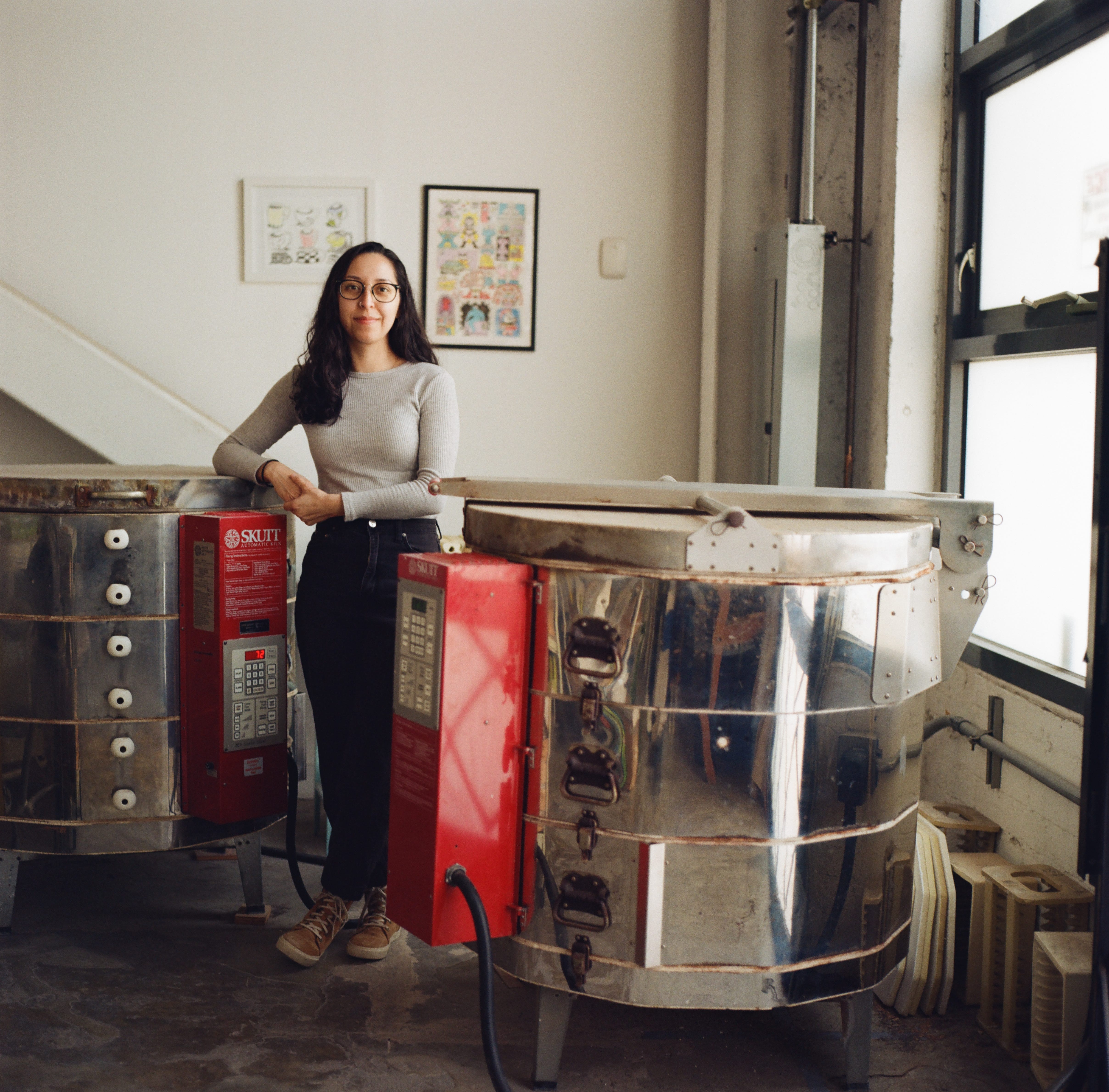
For artists who sell their work at craft markets and pop-ups, perceived value is an important topic to consider. The beauty of handmade is creating a one-of-a-kind piece that is unique to the hands of the artist, their story, their education, and the materials used. Since Leslie not only participates in markets but also helps organize and run them, I was curious to know what her thoughts were on perceived value.
“Yeah, that’s an issue where you go to a market, and you see certain people that price their stuff really low… either because they really want to sell it, or sometimes I think most of it is just people that don’t realize that their work is valuable. A lot of the time, artists have low confidence, and they’re like, ‘Well, my work isn’t good enough yet,’ because as the artist, you see all the flaws or all the things that didn’t go the way that you wanted them to go… so then people sometimes price lower because they’re just not confident in what they’re selling.
When I do the markets at my studio, and because I don’t want that to be an issue, both for the members, because I want them to be able to realize their own value and know how much time and effort they put into making all of this stuff, and for people that come in to buy, so that we see a similar range and not just someone that’s like way low versus someone that’s like way high.
I actually do have one-on-one meetings with all the members. I have them bring all of their work that’s for the market. You don’t really know unless you’ve been buying ceramics from small makers, and they’ve been pricing their stuff well. It’s like a domino effect. It is something that you have to learn. It’s relative because in the beginning, you might spend longer… your skills are still in progress, versus later on, I could spend maybe 10… 5 minutes, on a really good day, making a mug. It’s super quick, but that’s because I spent all these years learning.”
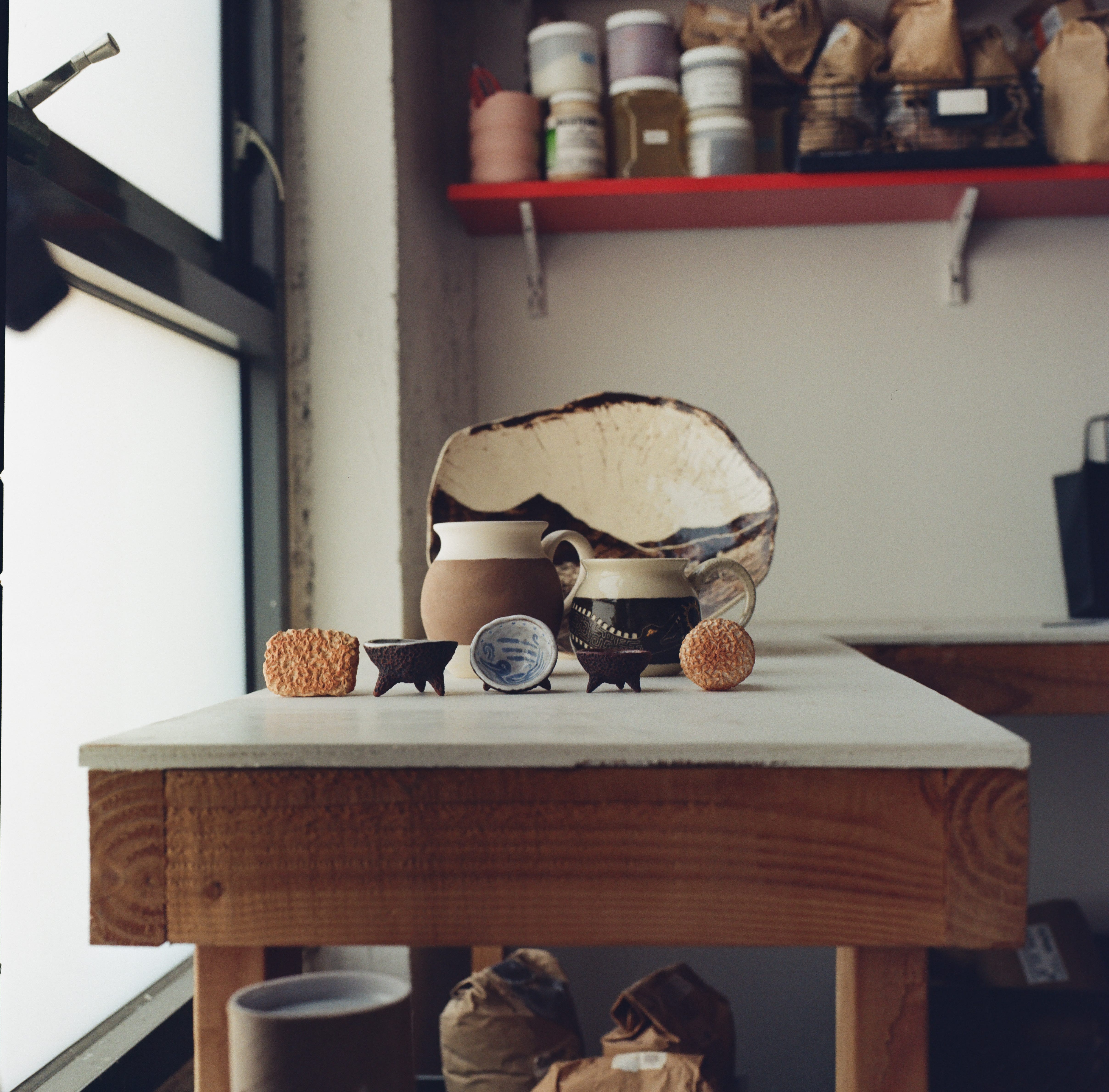
Leslie will sometimes go through books with images of pre-Hispanic and indigenous stamps, which feature designs similar to the ones she makes, but she adjusts them to add her own artistic style. Many artists can relate to the feeling of being inspired by other artists’ work but not wanting to copy them. However, we are all cumulative of the things that we take in, such as the movies we watch, the music we listen to, the books we read, and the people we meet everywhere we go. In the booklet Steal Like an Artist, Austin Kleon talks about how, within the context of art and creativity, nothing is completely original. Embrace inspiration and transform it to make it yours. Write the book you wish to read, and create the version of art you wish existed.
“We do have intersections, you know, it’s like you said, it’s not always a brand new idea. It’s just recycled ideas, and then you make it your own. People could come up with the same idea from their own personal experience, but they still arrive at the same place. I think that’s also pretty fun to see how that can happen.
Seeing a lot of these other Mexican artists, we’re all somehow very similar. But for me, that’s not a bad thing. Like myself, I’m taking my little tripod inspiration from molcajetes. It’s not a new thing. I’m not claiming that this is my own, only my own idea. Seeing how we all have similar ideas because we are basing our art on our culture, which is our shared culture.”
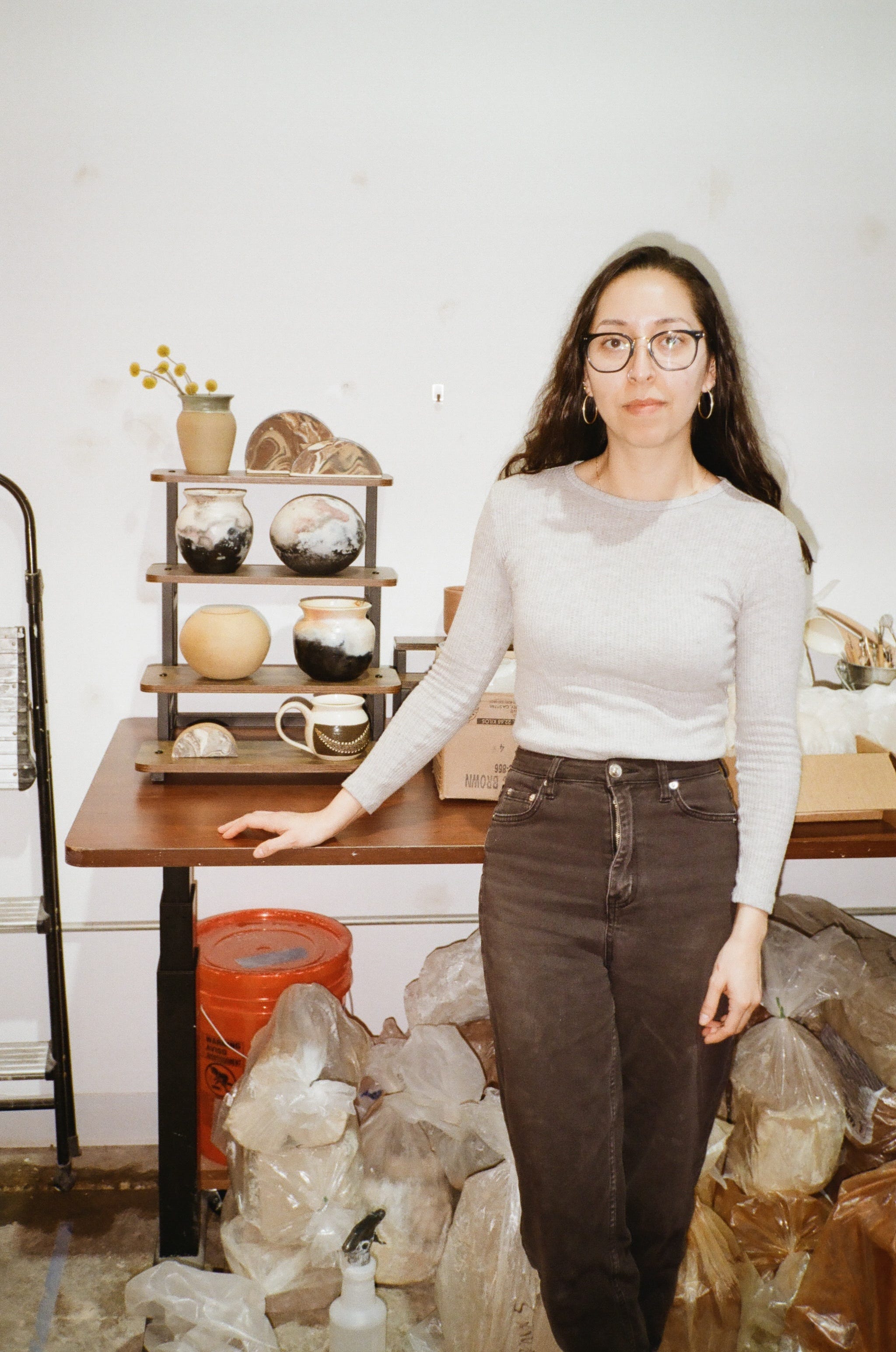
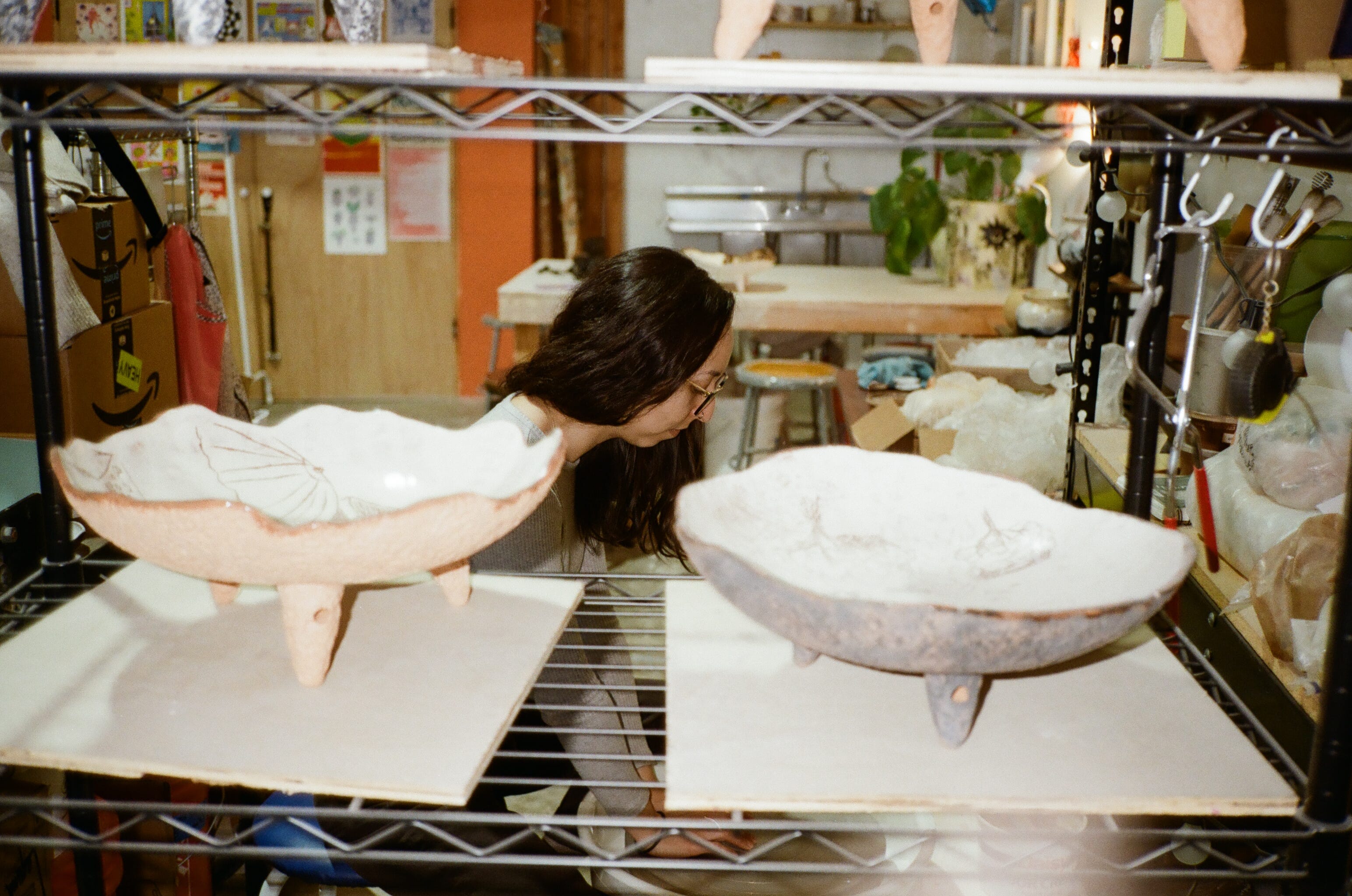
To close out the IIP Series, I tend to ask for one piece of advice. For Leslie, her piece of advice for anyone wanting to pursue ceramics as a hobby or career is that it is okay to be a student again and fail.
“That, I think, is the biggest thing where most of the time you’re not gonna really learn unless you fail. Take that experience, and then the next time they’ll do better. And if you fail again, then next time you’re going to do better. So it’s always gonna inform you. We shouldn’t be afraid of failure. It’s gonna happen. It should happen. No one’s perfect, and you can’t really learn unless you see how far you can take it.
It’s just remembering that you can be a student again. Don’t be afraid of failure. Don’t be afraid to ask questions. I think a lot of people just go internally, and you don’t want to ask because you don’t want to seem like you’re too inexperienced. Don’t be afraid to ask for help… and [be] open to new experiences. Just be open and see what happens.”
Instagram: @aldama_ceramica
Leslie is currently working on a website… coming soon!
Interviewed on February 2nd, 2026
Photographs shot on Hasselblad 500 c/m and Contaxt T2, Kodak Gold 200
What an amazing artist! Congratulations, Leslie!